Underground utility construction is rarely simple. Projects often involve multiple stakeholders, shifting conditions, existing infrastructure, public coordination, and tight timelines; all happening simultaneously beneath the surface. From municipal agencies and utility providers to field crews and project managers, successful underground construction depends on everyone working from the same information at the right time.
When communication breaks down, underground projects become vulnerable to delays, confusion, avoidable risk, and damaged trust. But when communication is clear, transparent, and proactive, projects move more efficiently, decisions happen faster, and long-term partnerships become easier to maintain.
For companies operating in underground construction, communication is not just an administrative task; it is a core part of execution quality.
At Anderson Underground, communication is closely tied to our emphasis on integrity, professionalism, reliability, and partnership-driven service.
Where Communication Breakdowns Cause Problems
Underground construction projects involve constant coordination between people, schedules, equipment, utilities, and field conditions. Even small communication gaps can quickly create larger operational issues.
Schedule Confusion
Construction timelines often depend on multiple moving parts aligning correctly. Crews may rely on utility locates, permits, material deliveries, inspections, or coordination with other contractors before work can proceed.
Without clear communication:
- Teams may arrive before a site is ready
- Equipment can sit idle
- Work sequences may become disorganized
- Deadlines become harder to maintain
On large underground projects, schedule confusion can create a ripple effect that impacts multiple stakeholders simultaneously.
Utility Conflicts
Underground environments are inherently complex because existing infrastructure is not always perfectly documented or visible. Crews frequently work around:
- Existing fiber infrastructure
- Electric lines
- Gas utilities
- Water systems
- Sewer systems
- Private utilities
When information is incomplete or delayed between teams, the likelihood of utility conflicts increases significantly. Clear coordination between field teams, utility owners, and project leadership helps reduce uncertainty before excavation or drilling begins.
Scope Misunderstandings
Communication problems also occur when project expectations are not aligned early in the process. Misunderstandings around:
- Project responsibilities
- Work limits
- Restoration expectations
- Timeline assumptions
- Change orders
- Access coordination
can lead to avoidable frustration between contractors, municipalities, utility providers, and field personnel.
Underground projects move more efficiently when everyone understands not only what is being built, but also how the project will be executed.
Delays Between Teams
Underground utility projects often involve handoffs between engineering, utility coordination, construction crews, inspectors, and project management teams.
When communication slows between those groups:
- Decision-making becomes delayed
- Field crews lose momentum
- Problems escalate unnecessarily
- Documentation gaps emerge
Strong internal communication helps keep projects moving even when field conditions change unexpectedly.
Why Transparent Communication Builds Trust
In underground construction, trust is built through visibility, responsiveness, and consistency. Stakeholders want confidence that issues will be communicated early, schedules will be managed honestly, and problems will be addressed directly.
Transparent communication helps create that confidence.
Municipal Stakeholders
Municipal agencies often evaluate underground contractors based on professionalism, responsiveness, and the ability to minimize disruption to the public.
Consistent communication helps municipalities:
- Understand project timelines
- Prepare for traffic or access impacts
- Coordinate inspections
- Respond to public questions
- Stay informed on project progress
For municipalities, communication directly impacts public perception of the project itself.
Utility Providers
Utility owners depend on reliable coordination to protect infrastructure, maintain service continuity, and reduce unnecessary risk.
Clear communication supports:
- Accurate utility coordination
- Better scheduling alignment
- Faster issue resolution
- Reduced conflicts during construction
It also reinforces accountability between all parties involved in the project.
Project Managers
Project managers need visibility into project conditions to make informed decisions quickly. Reliable reporting and proactive updates help reduce uncertainty and prevent small issues from becoming larger operational problems.
When communication is delayed or inconsistent, project oversight becomes significantly more difficult.
Field Teams
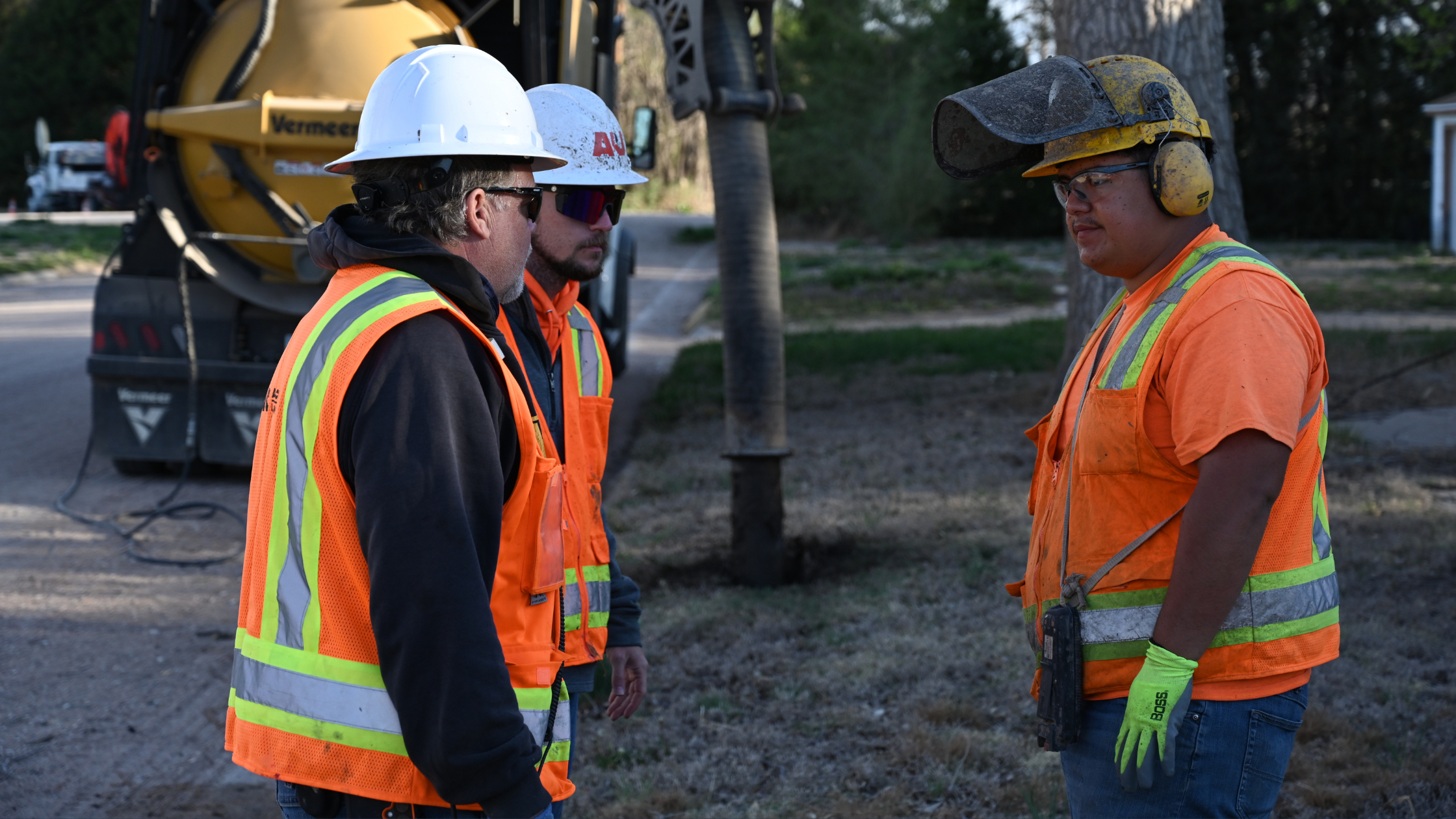
Field communication matters just as much as leadership communication. Crews rely on accurate information to perform work safely and efficiently.
This includes:
- Updated plans
- Utility information
- Site condition updates
- Scope clarifications
- Safety coordination
- Equipment readiness
Strong communication helps keep field teams aligned and reduces unnecessary downtime.
Communication in the Field
Communication on underground utility projects is not limited to meetings or emails. Much of the most important coordination happens in real time between leadership teams and crews in the field.
Leadership Coordination
Experienced underground construction leaders understand that conditions can change quickly. Effective coordination between project leadership and field crews helps maintain momentum while adapting to challenges responsibly.
This often includes:
- Daily planning discussions
- Crew coordination
- Utility updates
- Schedule adjustments
- Equipment allocation
- Escalation procedures for unexpected conditions
Reporting Expectations
Reliable reporting creates visibility across the project lifecycle. Clear reporting expectations help leadership teams, clients, and field personnel stay aligned throughout execution.
Examples may include:
- Daily progress updates
- Production tracking
- Safety reporting
- Utility conflict documentation
- Schedule updates
- Field condition reporting
Consistent reporting reduces uncertainty and improves accountability across teams.
Real-Time Problem Solving
Underground construction rarely goes exactly as planned. Existing infrastructure conditions, weather, access challenges, or utility conflicts may require immediate adjustments.
The ability to communicate problems quickly and solve them collaboratively often determines whether a project maintains momentum or experiences major delays.
Strong field communication allows teams to:
- Escalate issues early
- Coordinate corrective actions
- Maintain safety standards
- Minimize downtime
- Reduce confusion between stakeholders
Why Reliability Depends on Visibility
Reliable underground contractors are not simply the ones who complete work. They are the ones who consistently provide visibility into progress, challenges, and project expectations.
Accountability
Clear communication creates accountability at every level of a project. When responsibilities, schedules, and expectations are visible, teams can operate with greater consistency and ownership.
This accountability supports:
- Better execution
- Stronger coordination
- Faster issue resolution
- Improved client confidence
Faster Decision-Making
Projects move faster when stakeholders have access to accurate information. Visibility allows decisions to happen earlier, which helps reduce downtime and operational bottlenecks.
In underground utility construction, delays often become more expensive the longer information gaps remain unresolved.
Reduced Surprises
Unexpected issues cannot always be prevented in underground work, but communication helps reduce how disruptive those issues become.
Proactive communication:
- Helps stakeholders prepare for changes
- Improves schedule management
- Builds confidence during difficult situations
- Prevents misunderstandings from escalating
For many clients, transparency during problems is just as important as performance during ideal conditions.
Conclusion
Underground utility construction depends on far more than equipment and technical capability. Projects succeed when communication remains clear between field crews, project managers, municipalities, utility owners, and leadership teams throughout execution.
Strong communication reduces risk, improves coordination, minimizes delays, and strengthens long-term project outcomes. It also reinforces accountability, professionalism, and trust; qualities that matter significantly in underground infrastructure work.
For underground contractors, communication is not separate from execution quality. It is a foundational part of delivering projects safely, efficiently, and reliably.
Why is communication important in underground construction?
Communication helps coordinate schedules, utilities, crews, inspections, and project expectations. Without clear communication, underground projects are more likely to experience delays, conflicts, safety risks, and operational inefficiencies.
How do contractors coordinate underground utility projects?
Underground utility projects are typically coordinated through planning meetings, utility locates, reporting systems, field communication, scheduling updates, and ongoing collaboration between project managers, municipalities, utility owners, and field crews.
What causes underground project delays?
Common causes include utility conflicts, incomplete information, weather conditions, permit issues, scheduling breakdowns, equipment challenges, and communication gaps between stakeholders or project teams.
What is utility coordination?
Utility coordination is the process of identifying, managing, and communicating around existing underground infrastructure before and during construction work. The goal is to reduce conflicts, improve safety, and support efficient project execution.
What industries rely on underground infrastructure?
Industries that rely heavily on underground infrastructure include telecommunications, energy, water utilities, wastewater systems, transportation, renewable energy, and municipal public works.
How are underground construction projects managed?
Underground construction projects are managed through coordinated planning, scheduling, utility coordination, field supervision, safety oversight, reporting systems, and communication between all project stakeholders.